
2027 Vegetable Garden Calendar: Planning a Year of Sowing and Planting
A 2027 vegetable garden calendar helps you plan your sowing, planting and harvesting without having to work everything out at the last minute. To make the most of it, tailor it to your garden: your vegetables, the size of your plot, your local climate and your availability. This guide provides an overview of the year and a method for turning your ideas into a growing plan.
Start by thinking about the crops you want to grow
Before looking for dates, write down what you’d like to cook. A family that enjoys salads on a regular basis won’t have the same priorities as someone who mainly wants to harvest tomatoes in the summer. Divide the crops into three categories: the essentials, those you’re already familiar with, and the ones you’d like to try. Set aside a few for experimentation so you can learn, but don’t dedicate all your space to them.
Don’t confuse the number of seeds with the amount to be grown. A packet may contain far more seeds than your plot can accommodate. For each vegetable, note down the desired quantity and then compare it with the space required. If there isn’t enough room for a particular crop, it’s better to remove it from the plan now rather than start growing plants that you won’t know what to do with.
Create an annual table containing four pieces of information
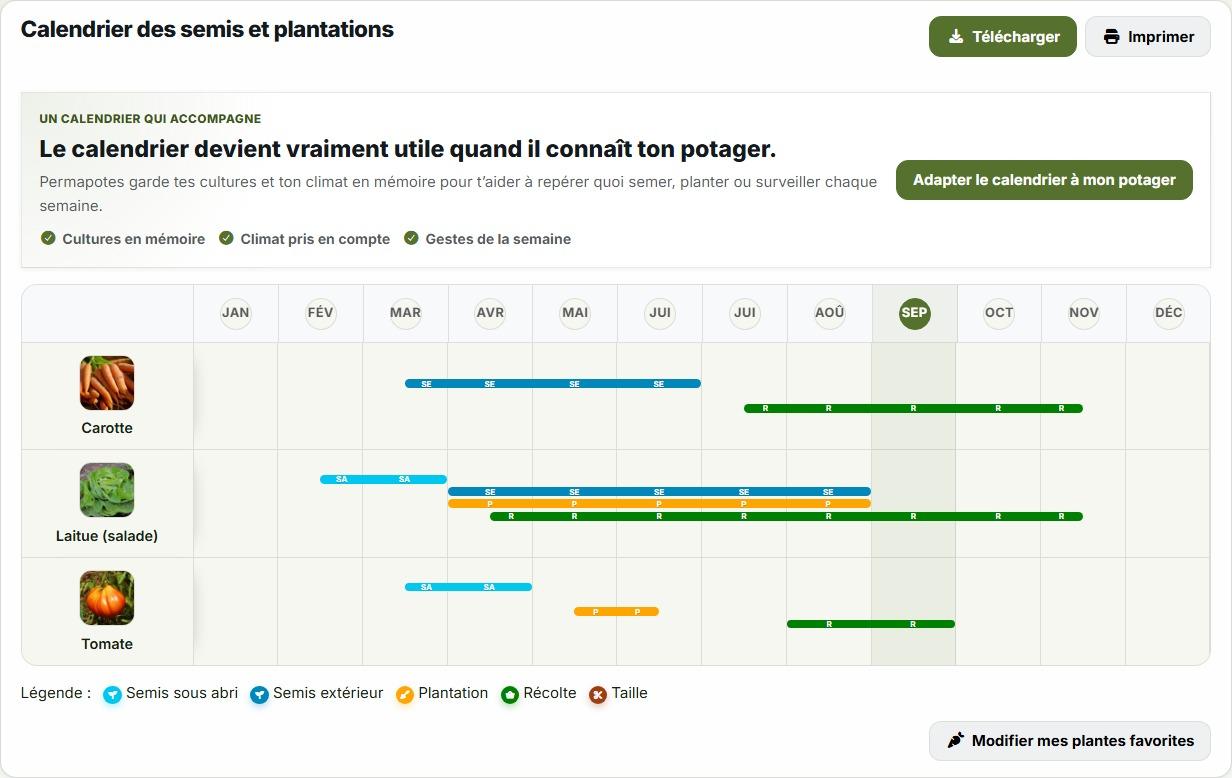
For each crop, identify the sowing period, when it is planted out in the garden, how much of the plot it occupies, and the expected harvest. Some crops are sown directly in the ground; others are started in a container and then planted out. Your table should show these differences rather than simply having a single box labelled with the name of the vegetable.
| Culture | Getting started | Location | Follow-up required |
|---|---|---|---|
| A crop sown in situ | Sowing in the plot | Row marked out from the moment of sowing | Thinning, pruning if necessary, harvesting |
| A plant started in a pot | Sowing in a suitable space | Plot available for planting | Caring for the seedlings and then transplanting them into the garden |
| Purchased seedlings | Receipt and inspection of seedlings | Plot ready for them to move in | Planting, initial watering, maintenance |
Add a column for the variety and another for the actual date of planting. The planned date helps you organise your work; the actual date forms your record. Keeping both will help you understand any discrepancies, rather than deleting changes as the season progresses.
Preparing for 2027 in key stages
In a temperate garden in the Northern Hemisphere, the period leading up to the first planting is used to take stock, check equipment and organise the layout. At the start of the season, focus on the crop cycles you can manage properly. Whilst setting up the garden, check access routes, available space and watering facilities. During harvests, record the results and only plan for subsequent crops that are still feasible.
This is not a universal guide to sowing dates. The Southern Hemisphere and tropical climates require different seasonal guidelines. Even within a given region, the variety and conditions of the garden can affect the best time to sow. ‘Preparing for 2027’ provides an annual framework; it does not offer a weather forecast several months in advance.
Make sure you fit the programme into your diary
Make a note of any time you’ll be away before starting to grow multiple crops. A week’s holiday might coincide with the need to look after young plants, water them or harvest them frequently. Work out what can be managed and simplify your schedule if necessary. The tasks you plan must be compatible with your actual routine.
Group together tasks that use the same equipment: preparing labels, checking containers or taking stock of seeds. This avoids having to carry out the same preparations repeatedly. However, do not group all your sowing together on a single date simply to save time: each crop has its own specific requirements and the best time for sowing.
Create your own personalised calendar in Permapotes
Open the vegetable garden calendar, select the vegetables for your project and set the climate zone. Then review the growing seasons in light of your chosen varieties, your garden’s aspect and the specific recommendations for each crop. Start with a short list: you can expand it once the first plots have been allocated.
The steps in Permapotes
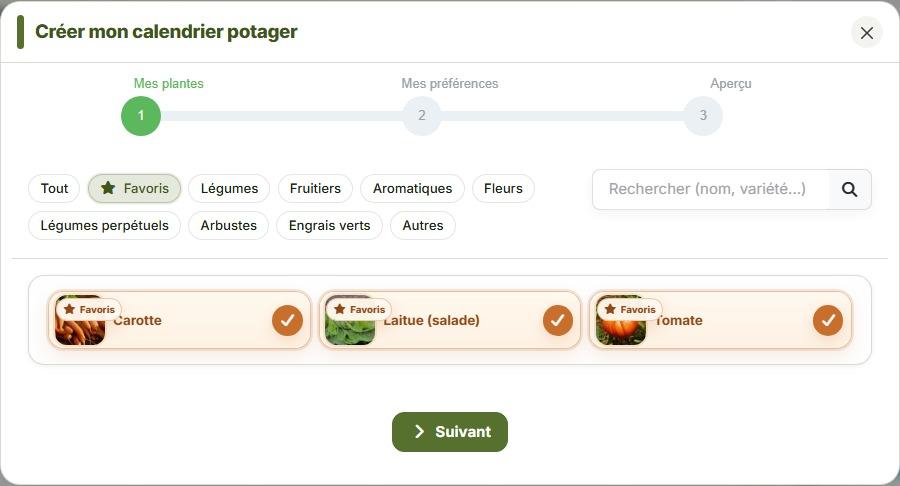
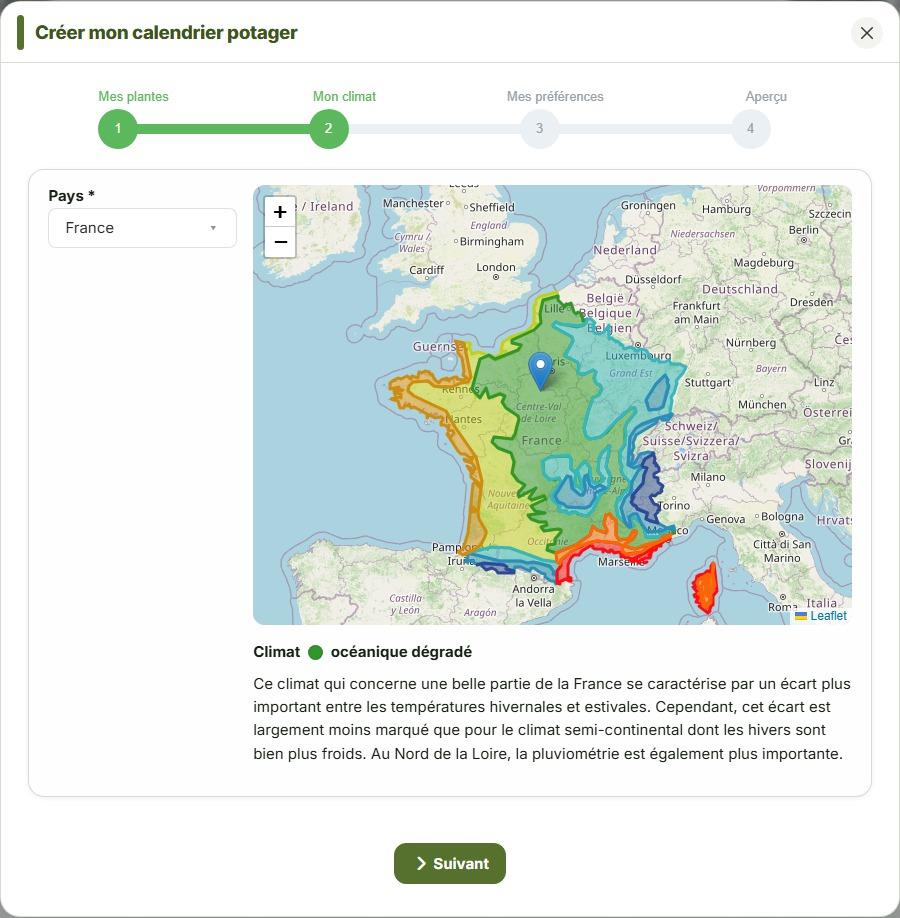
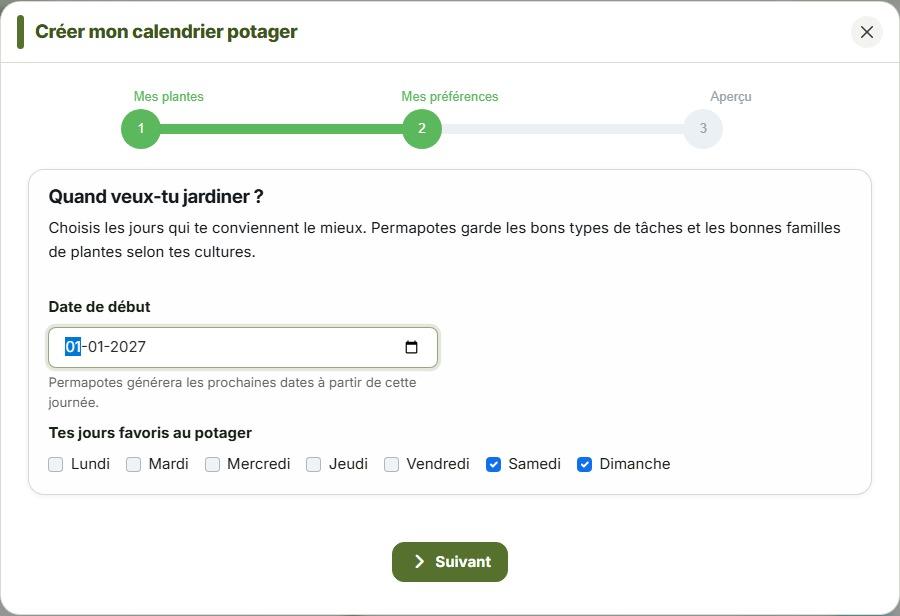
Use the vegetable garden plan to check the plots. Each crop listed in the calendar must correspond to a specific area in the garden. The annual plan then becomes a series of practical decisions: what to grow, where to grow it and which stages to monitor.
The document to keep at the end of the season
Keep the revised calendar, a few harvest dates and your key observations. Make a note of the crops you’d grow again, any excess yields and periods when you were too busy. You don’t need a detailed daily log: a few reliable details are enough to help you plan for the next season with a bit more perspective.
