
How can I identify a plant I don't know?
In my permaculture vegetable garden, I've already explained that I mulch the soil. This has several advantages: it nourishes the soil to keep it alive, and prevents weeds (and don't say weeds!!!) from growing. Sometimes, however, spontaneous shoots emerge from the ground and it's not always easy to identify them.
I personally use three methods:
- The Pl@ntNet app: simply take a photo of a leaf, stem or fruit and submit it to the app. It will then show you the plants that most closely resemble your photo. It works almost every time, and it's really easy to use. The app is available on iOS and Android.
- Facebook groups for plant identification: it's best if you take the time to find in local permaculture groups, so you can find other permapotes who know the plants suited to your local climate.
- The visualencyclopaedia of wild plants which is a goldmine for anyone who wants to study or recognise plants
I'll take this opportunity to explain my weeding technique: it's practically non-existent. In fact, with mulching, few spontaneous plants come out of the ground and as long as they don't get in the way of my crops, I leave them alone. If, however, they become too invasive or are toxic, I remove them. I'm thinking in particular of the clover that had practically covered all my carrot leaves. Without sun, there's no life, so no carrots, so I had to do something! As far as toxic weeds are concerned, I'm thinking of black nightshade and its berries, which should definitely not be eaten.
With weeds right in the middle of vegetables, some may see it as an unsightly garden. Personally, I see only advantages:
- I have fewer pests: spontaneous vegetation limits the proliferation of pests such as slugs, which will leave your vegetables alone and attack the weeds first
- I have more time for myself and my family: less weeding means more free time to devote to what you love!

Articles you may like
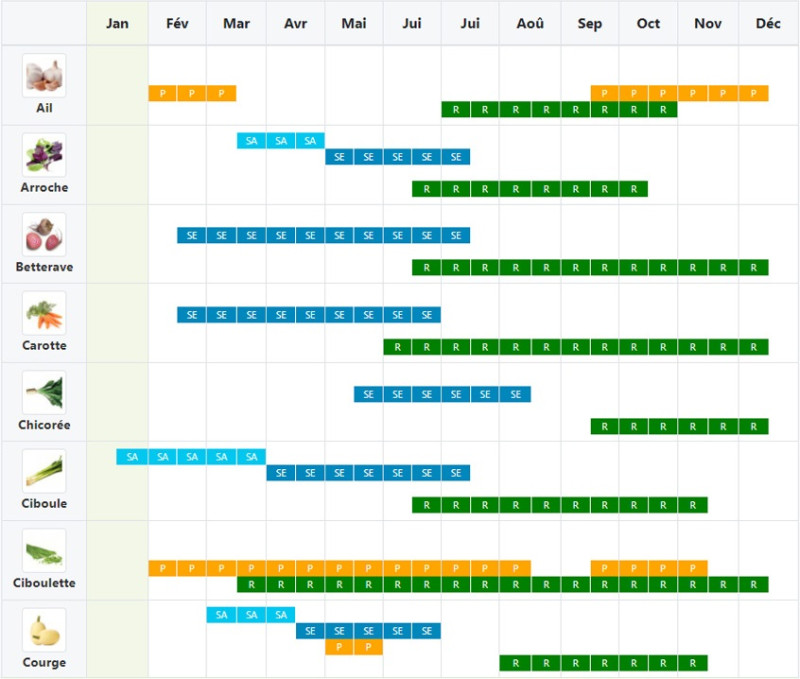
My annual calendar
View the main sowing, planting, and harvest periods for your favorite plants, then print or download these markers to prepare your season.