


Planting calendar: organising transplanting in the vegetable garden
A planting schedule organises the process of moving young plants to their permanent locations. It is used to prepare the plot, receive or produce the plants, and monitor their planting. To avoid rushing into purchases and having plants left waiting in pots, plan your schedule based on the date when the garden will actually be ready to accommodate them.
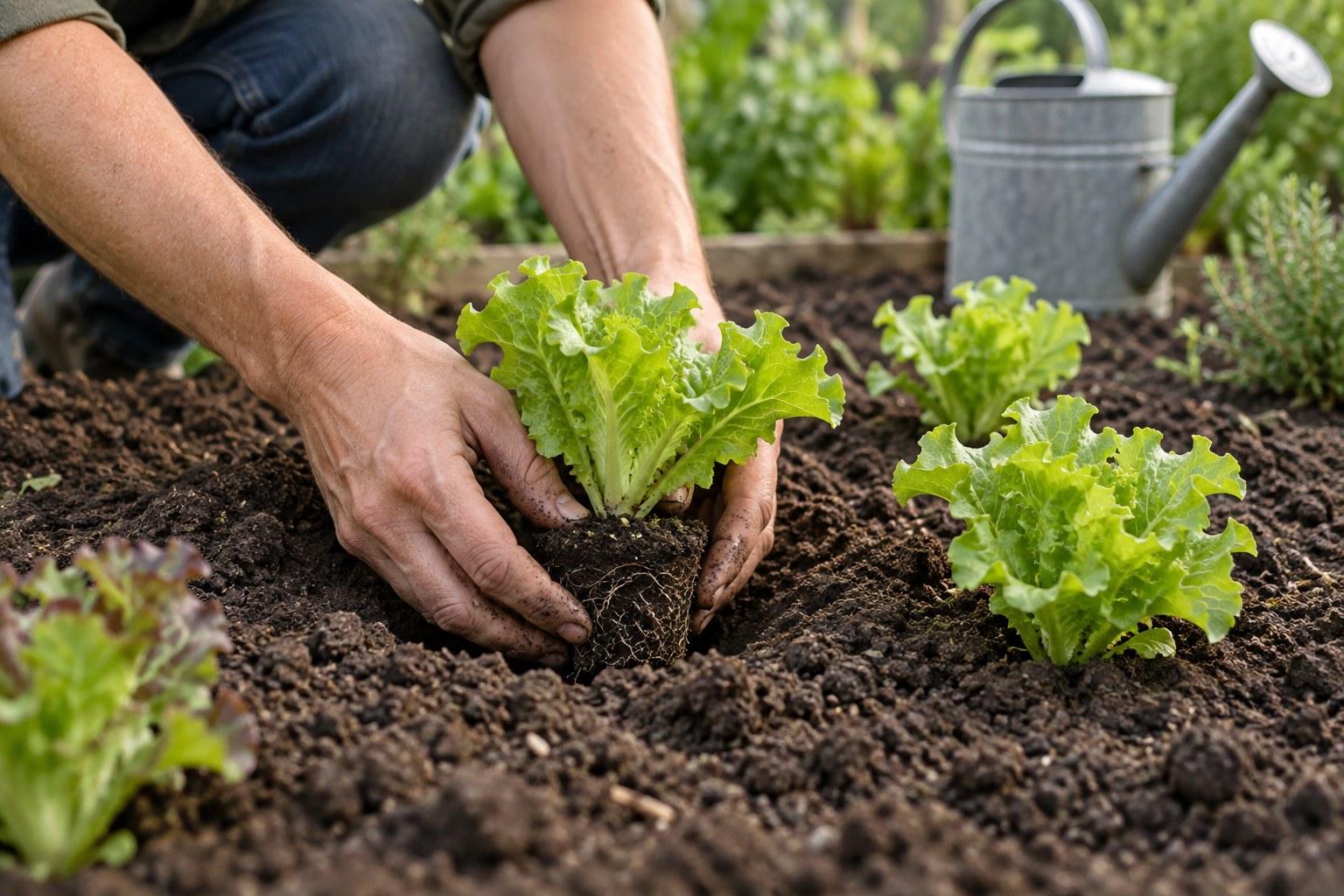
Start at the plantation and work your way through the preparations
Choose a planting time that is suitable for the crop and local conditions, then make a list of what needs to be in place before this stage. The plot must be available, access to water must be checked, and the spacing must be known. If the crop requires a support structure, plan its location before the plants make it difficult to carry out any work.
When you grow your own seedlings, factor in the time needed to look after them whilst they’re in their pots. When you buy them, arrange to receive them close to a time when you’ll be able to look after them. So the planting schedule doesn’t necessarily start on the day you pick up your spade: it includes the preparations that make that day possible.
Check the seedlings before booking the whole plot
Check the labels to confirm the species and variety. Take a look at the condition of the plants, how they look and the container. If a particular batch is causing problems, don’t stick to the original plan at all costs: a smaller quantity or a different planting arrangement may be more suitable than dedicating an entire plot to plants you’re not happy with.
Also keep the supplier’s information. It may specify planting conditions, spacing requirements and useful precautions. Two varieties with the same species name do not necessarily require the same planting arrangement.
Prepare an installation sheet for each series
| Section | Information to be entered |
|---|---|
| Identification | Species, variety and origin of the plants |
| Destination | Plot, number of plants, planned layout |
| Terms and Conditions | Ground conditions, weather to be checked, protective clothing if necessary |
| Follow-up | Actual date, follow-up watering, observations |
This sheet saves you from having to look up the same information when it’s time to plant. It also enables someone else to understand the plan if you entrust them with part of the monitoring. Short, clear notes are better than a list of vegetables with no clear purpose.
Distinguishing between intermediate transplanting and final planting
Transplanting can refer to either moving plants to a new pot or planting them out in the garden. Specify the destination for each task. A line saying ‘transplanting on Tuesday’ does not indicate the equipment required or the area to be prepared. Instead, write down what will be moved and where the plants will go.
Plants grown in a protected environment may need to be gradually acclimatised to outdoor conditions. Prepare for this stage in line with the crop’s requirements and the advice you have been given. Simply setting a date several months in advance is not enough to decide that all the plants can be left outside.
Plant a quantity appropriate to the space available
Don’t base your decision solely on the number of seedlings available. Work out how many will fit in the plot using the recommended spacing. Leave enough space for access paths for maintenance and harvesting. Small seedlings can easily give the impression that there is plenty of space left; your plan must take their growth into account.
If you have too many seedlings, decide on a solution before planting: find another suitable spot, reduce the number, or divide them up. Cramming them all into a plot that’s already been set aside makes the plan less accurate and can make monitoring more difficult.
Preparing for the initial observations following installation
Make a note to visit the garden again soon to check how the plants are establishing and how they’re looking. The aim isn’t to schedule the same watering routine in all circumstances, but to remind yourself to monitor their needs after planting. Make a note of any differences between the different locations, especially if you’re comparing several batches.
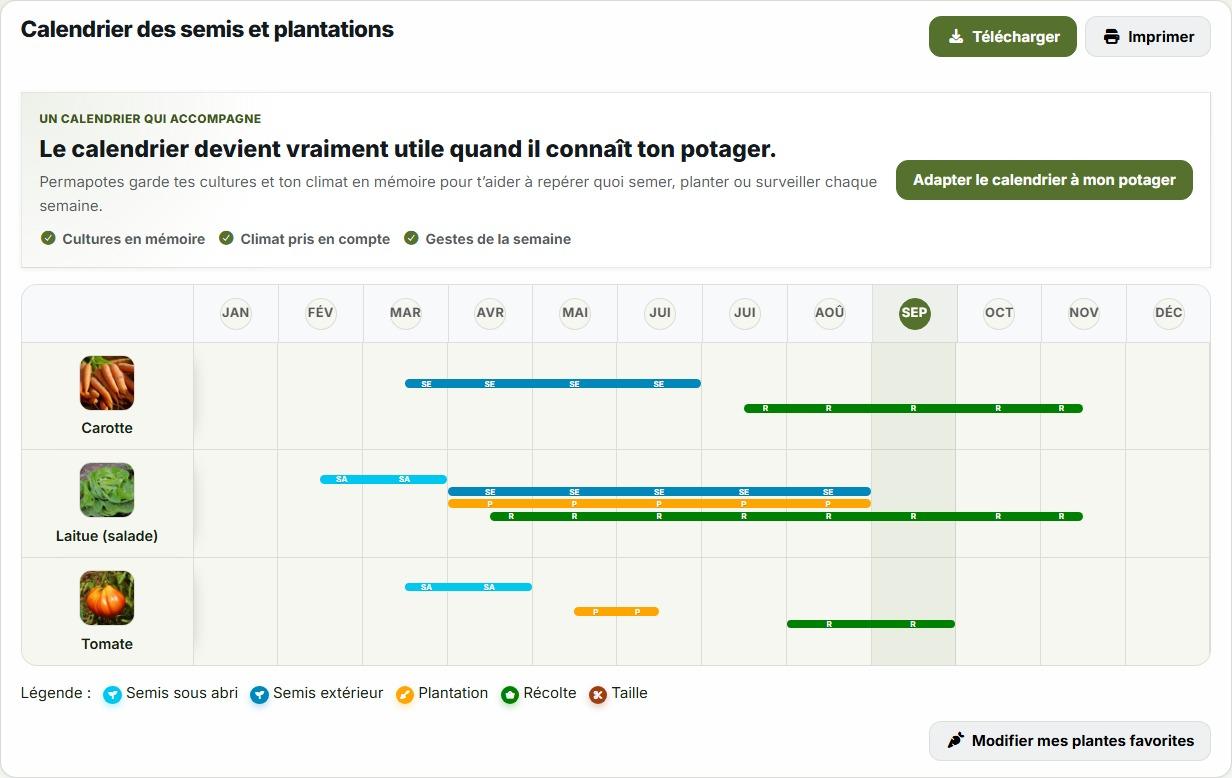
Use the vegetable garden calendar to put the periods into context and the garden plan to keep track of the planting locations. At the end of each planting session, make a note of the actual number of plants and the date the work was carried out. This information will help you understand the outcome, even if you have altered the original plan.
The steps involved in Permapotes
Further guides
