
Sowing calendar (France)
- Draw the plan of your vegetable garden to organize it more easily
- Browse your calendar so you don’t miss any garden tasks
- Ask questions to Permapotes and help when you can
- Find hundreds of cultivation sheets and many tips

Cultivate a vegetable garden in France: climate, advantages and challenges
France benefits from great climate diversity, directly influencing the management of a vegetable garden. Whether you are in oceanic, continental, Mediterranean or mountain climate, it is essential to adapt your cultures and your gardening practices to ensure an abundant harvest.
The oceanic climate, present in the west of France, is characterized by gentle winters, temperate summers and regular rains. This type of climate is ideal for leafy vegetables such as salads, spinach and cabbage, as well as for crops requiring humidity, such as potatoes and carrots. The continental climate, which is found in the east and the center of the country, is distinguished by cold winters and hot summers with late frost risks. It is perfectly suitable for root vegetables such as beets, turnips and radishes, as well as crops requiring summer heat, such as tomatoes, eggplant and peppers. The Mediterranean climate, specific to the southeast, offers soft winters and hot and dry summers, thus promoting the vegetables of the sun such as tomatoes, zucchini and melons. However, watering should be mastered to avoid the effects of drought. Finally, the mountain climate, present in the Alps, the Pyrenees and the Massif Central, is characterized by harsh winters and short summers, which makes it conducive to short seasonal crops such as potatoes, dwarf beans and cabbage.
The climate diversity of France makes it possible to cultivate a wide range of vegetables and fruit trees throughout the year. The marked seasonality promotes the rotation of crops and the rest of the soil in winter, while certain regions benefit from favorable rainfall reducing irrigation needs. However, certain difficulties must be taken into account in ensuring the proper development of the vegetable garden. Late frosts can damage young plants, but they can be countered thanks to tunnels, winter sails or an indoor space before transplanting. Summer drought, frequent in the south, can be attenuated with thick mulch and drip irrigation. In the regions where precipitation is excessive, good drainage of the soil and the cultivation in mounds make it possible to avoid the asphyxiation of the roots. Pests and diseases are also challenges to overcome, but the introduction of companions like India eyelets against aphids or basil against mildew can help maintain a natural balance.
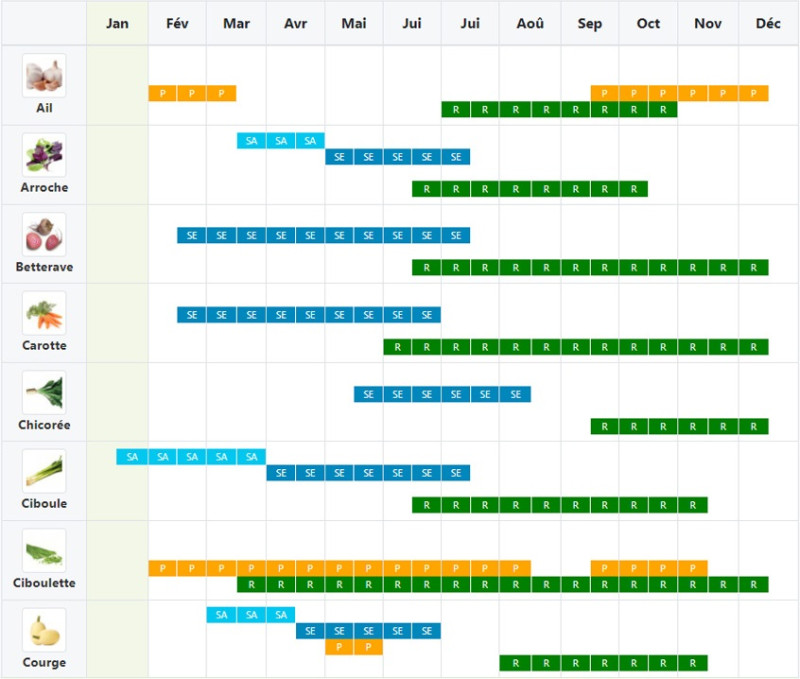
To succeed in his vegetable garden in France, it is crucial to adapt his planting calendar according to his region. From March-April, summer vegetables such as tomatoes, zucchini and beans can be sown, while in August-September, it is time to prepare for autumn and winter crops like lamb's lettuce, Spinach and winter radishes. The rotation of crops is an essential practice for preserving soil fertility and limiting diseases. Good planning optimizes harvests and ensuring a productive vegetable garden throughout the year. Do you want to organize your vegetable garden according to your climate and your needs? Discover our vegetable planning tool and our practical guides for effective gardening and respectful of nature!