
A plastic hen house: a must for eliminating red lice from hens!
It's a real pleasure to be able to eat your own vegetables, but also to be able to collect fresh, organic eggs. Although chickens require very little maintenance, they are nevertheless the victims of multiple parasites that can disrupt egg-laying, but also be harmful to their health in the long term. We hear a lot about avian flu, which is making the headlines, but there are many other problems that affect our backyard chickens. Let's take a closer look at red lice.
What are red lice?
The red louse is a member of the mite family. It is haematophagous, which means it feeds on blood unlike the mallophagous louse, which feeds on feathers and epidermal debris it finds on the hen. Another big difference between these two lice is where they live. The white or grey louse, depending on what you call it, is always found on the hen, a bit like a flea on a dog. Red lice live exclusively in the henhouse. They attack your poultry at night and feed on their blood. They use holes and gaps to hide and lay their eggs. They can reproduce at lightning speed in wooden henhouses and nest boxes. Especially if the weather is hot and humid.

How to recognise symptomatology in your barnyard
There are some unmistakable signs that can lead you to believe that your poultry are victims of these microscopic mites. You need to act quickly before the damage becomes irreversible. For example, if your hen seems more listless than normal, lying down more often and scratching the ground less in search of food, it is quite possible that she is suffering from anaemia and that her general condition is deteriorating. If a solution is not found very quickly, the hen will continue to weaken until she dies.
Another warning sign that you can't miss is the laying of eggs. This can gradually decline until it stops altogether. Check to see if any of your hens are scratching frequently, losing feathers, especially around the neck, or have a whitening crest. If your hens are easy to handle, you can check for red lice by inspecting their skin. Bite marks leave no doubt as to the presence of red lice in your henhouse.

Unfortunately, it's not uncommon to become aware of the presence of these mites when they have already completely infested the henhouse. To eradicate them, you have only one solution: clean the henhouse completely. To get rid of them, you'll need to blowtorch the henhouse, if it's made of wood. Red lice do not tolerate high temperatures. You won't be able to use your hens' straw for your vegetable garden either, as red lice can live for nine months without food and still reproduce. You'll have to burn the straw to get rid of them. If you don't have the time to clean and disinfect your hens' habitat, there's still a much simpler solution: buying a plastic chicken coop.
A plastic hen house: a plus for the well-being of your barnyard.
Plastic hen houses have fewer moisture problems than wooden ones. The environment will therefore be healthier for your hens and less conducive to the development of red lice. In this type of habitat, there will be no holes or gaps between the slats where mites can hide. Plastic may get a bad press, but it has a serious advantage when it comes to hygiene. It's easy to clean, either with a karcher or a sponge and hot water. You'll avoid any toxic products for the environment and your pets.

If you notice red lice on your hens when you have a plastic hen house, you should be aware that eradicating them will be much easier with this type of housing than with those made of wood. The only downside is the price. There are several models available, but it's still a fairly expensive purchase. But you can also buy a plastic dog house, which costs much less. All you have to do is fit it out for your chickens.
To avoid an invasion of red lice, you can invest in a plastic habitat from the outset. This will save you a lot of inconvenience and mean you won't have to fight these particularly invasive mites on a permanent basis.
If you want to avoid an invasion of red lice, you can invest in a plastic habitat from the outset.

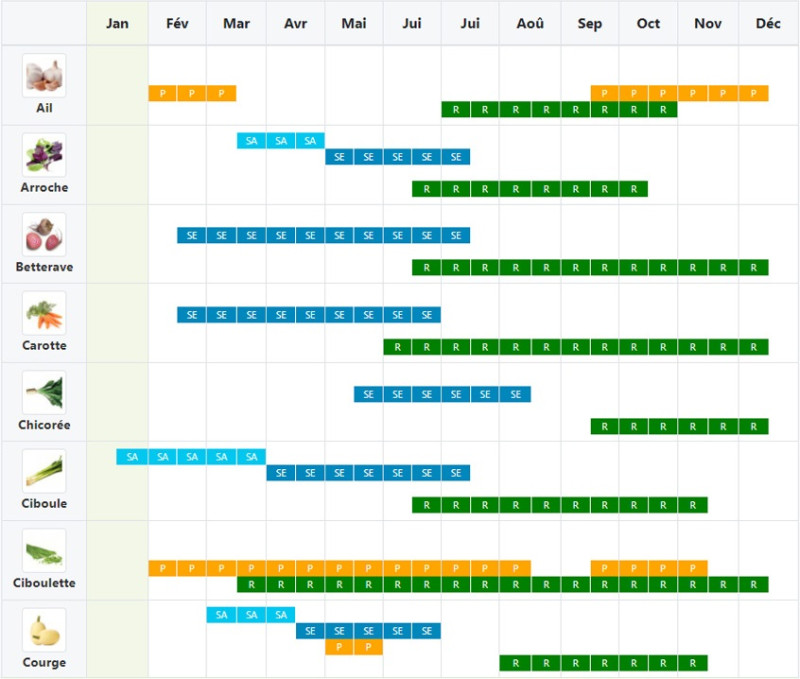
My annual calendar
View the main sowing, planting, and harvest periods for your favorite plants, then print or download these markers to prepare your season.