
How can I attract ladybirds to my garden?
There are secret battles going on in our vegetable gardens! Aphids suck the sap from our plants. Ants protect them by feeding on their honeydew. As for ladybirds, they devour aphids, but are, themselves, threatened by ants.
Aphids, the gardener's enemy

Nearly a thousand species of parasite haunt European gardens. They come in all colours: grey, white, green and red. Some are specialised, such as peach or broad bean pests, or the dreaded cabbage aphid. Aphids are one of the scourges of the vegetable garden. Its honeydew and stings slowly kill plants and vegetables... but it's possible to get rid of them naturally even without black soap, thanks to ladybirds!
The ladybird, a gardener's ally
For lovers of organic farming, the "beast to goodness" is the gardener's best ally. Ladybird larvae can swallow over a hundred aphids a day. As an adult, the ladybird, which can live for two to three years, consumes slightly fewer.

How to attract ladybirds
Bug beetles should gradually come and populate your garden as long as you set aside places for them to take refuge. Dense vegetation, a wild meadow, shrubs and an insect hotel will probably do the trick. If your garden is varied and a major producer of pollen and nectar, ladybirds will come naturally, especially if there are aphids. They will overwinter under a bundle of wood, a pile of moss or even under a stone.

Another option is to make an insect shelter. There are several types: vertical, horizontal, free-standing or suspended. The important thing is that it can benefit from warmth while protecting itself from the wind. There are many ways of attracting insects, and they are all adapted to each insect: straw, dry wood, rotten wood, bricks, clay, fibres and moss. Set apart in the garden, in the sun, close to the vegetation, it is built from chestnut or fir wood and should be slightly raised.
The different varieties of ladybird
If, after several years of aphid invasion, you find that no ladybirds come to help you in the vegetable garden, you can also buy some from specialists. There are many varieties available:
- The very voracious seven-spotted ladybird
- The two-spotted ladybird that lives high up (invaluable against tree aphids)
- The comma ladybird, specialised for apple aphids
- The eleven-spotted ladybird, which prefers aphids on shrubs (roses, laurel...)
- The twenty-two-spotted ladybird which relishes a parasitic fungus
Mention must be made of the Asian ladybird, which is larger, but should be avoided, as it is predatory on the seven-spotted ladybird.

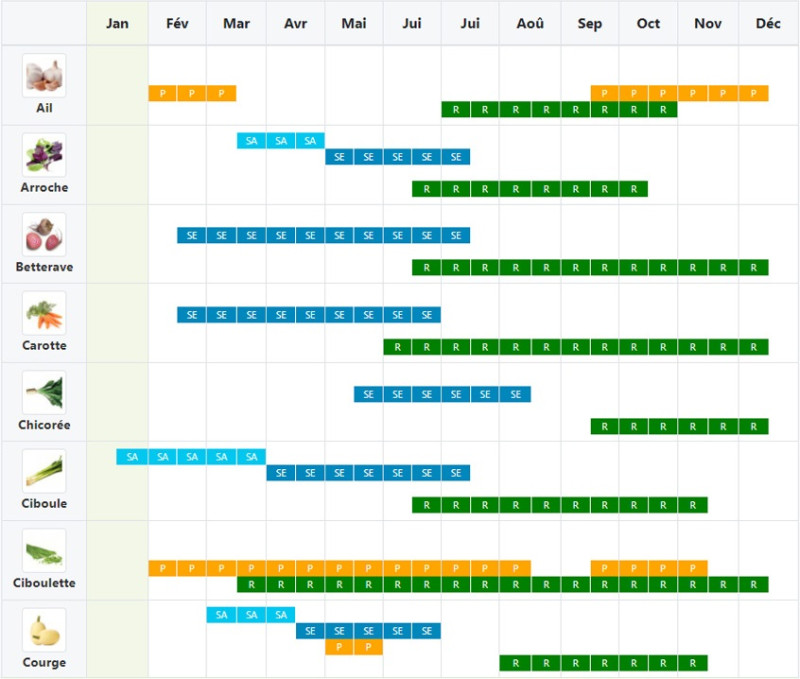
My annual calendar
View the main sowing, planting, and harvest periods for your favorite plants, then print or download these markers to prepare your season.