


My installation in the greenhouse to protect seedlings from frost! 🍅❄️
Many of you were intrigued by the seedling greenhouse in my cold greenhouse, which allows me to store all my seedlings outside the house while protecting them from the night frosts that are still very common at this time of year. So here's a little presentation of my installation!
Until two years ago, I stored all my frost-susceptible seedlings in the house, and I have to admit that this has a number of disadvantages. Firstly, it takes up a lot of space and given that the last frosts can still occur until mid-May, it's really restrictive. Secondly, it's sometimes difficult to prevent seedlings from damping off, since the temperature in the house is a little too high and the lack of light causes seedlings to wither at the start of the season. If this happens to you, you'll just have to throw them in the compost and start all over again... now that's a bit frustrating for the gardeners in us!"
Practically all seedlings in the "cold" greenhouse from mid-March
So last year, I decided to build a "heated" seedling greenhouse placed on a shelf in my cold greenhouse so that I could store all my gelatinous seedlings from March onwards outside. It works really well, and uses very little electricity so if that inspires you, here are some photos and details of my installation.


As you can see, the installation is made up of different elements:
- A shelf attached to the greenhouse walls on which I placed Recticel-type insulating panels at the bottom. I attached a 60-watt heating cable in a coil fixed by U-shaped rods in the insulation. I covered the whole thing with +/- 1 cm of white sand, which I keep damp for better inertia.

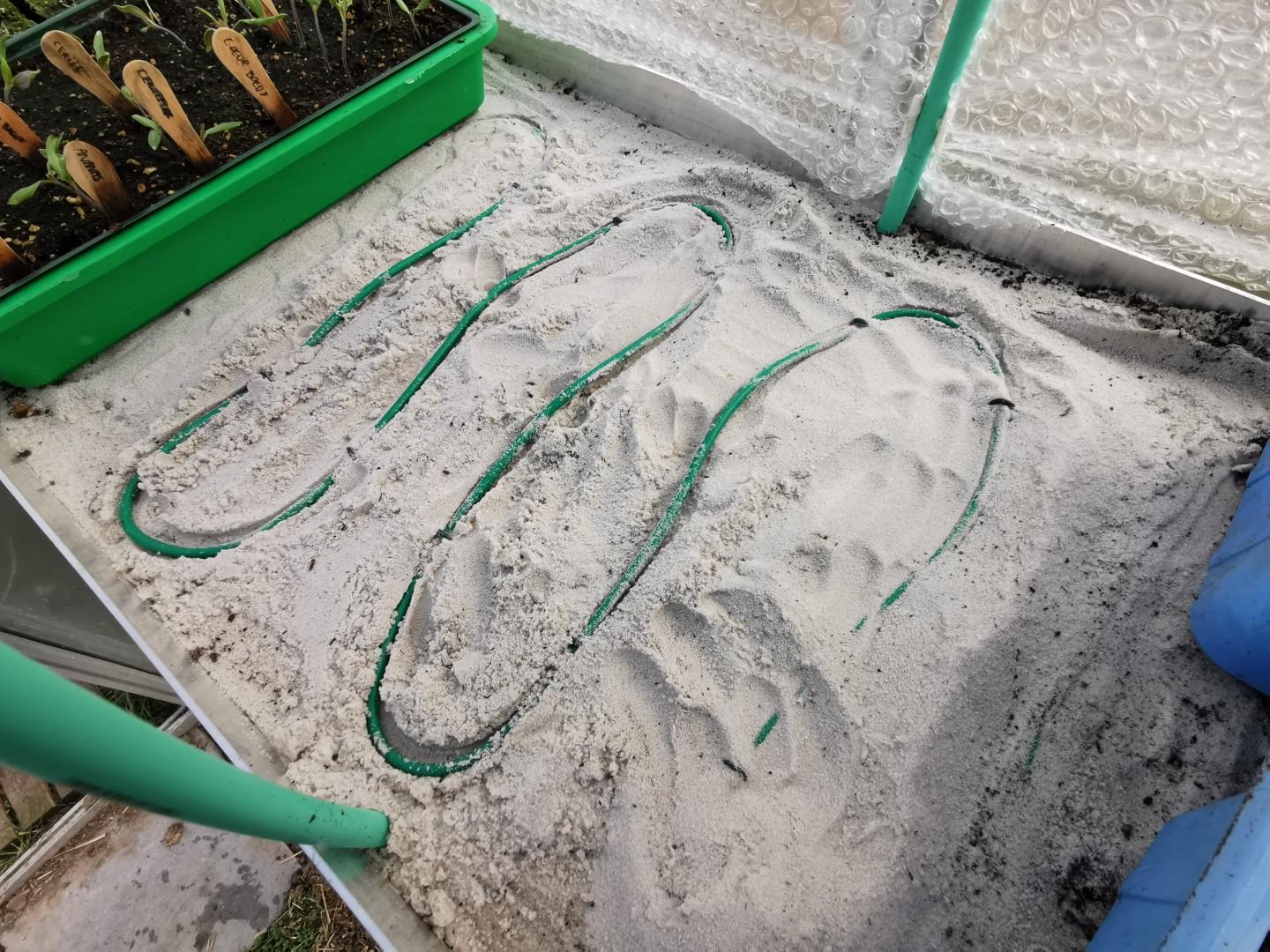
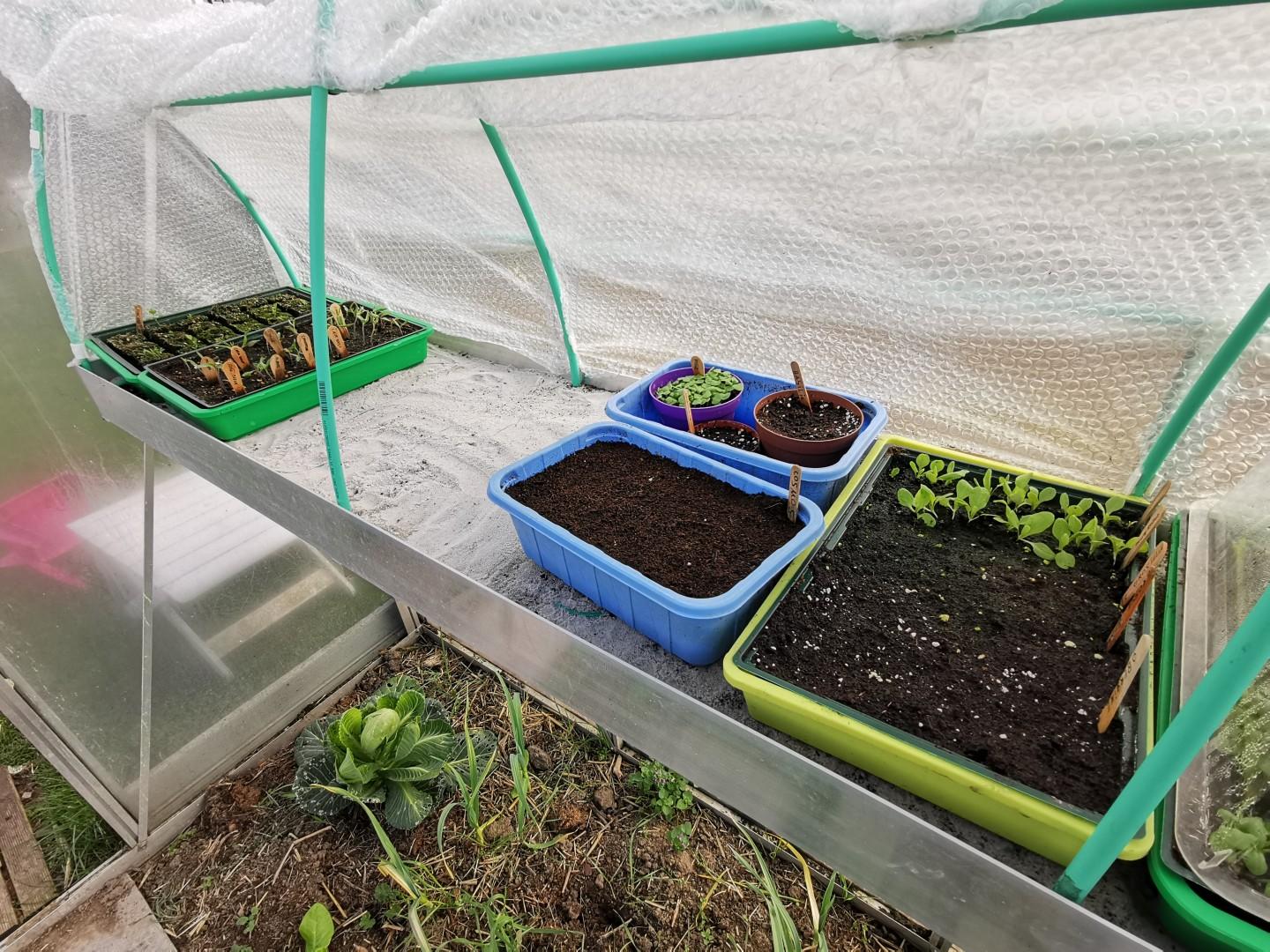
- On top of the shelf, I created a structure with bubble wrap that keeps the temperature down at night and accentuates the warmth during the day. I can open it either all the way or halfway.

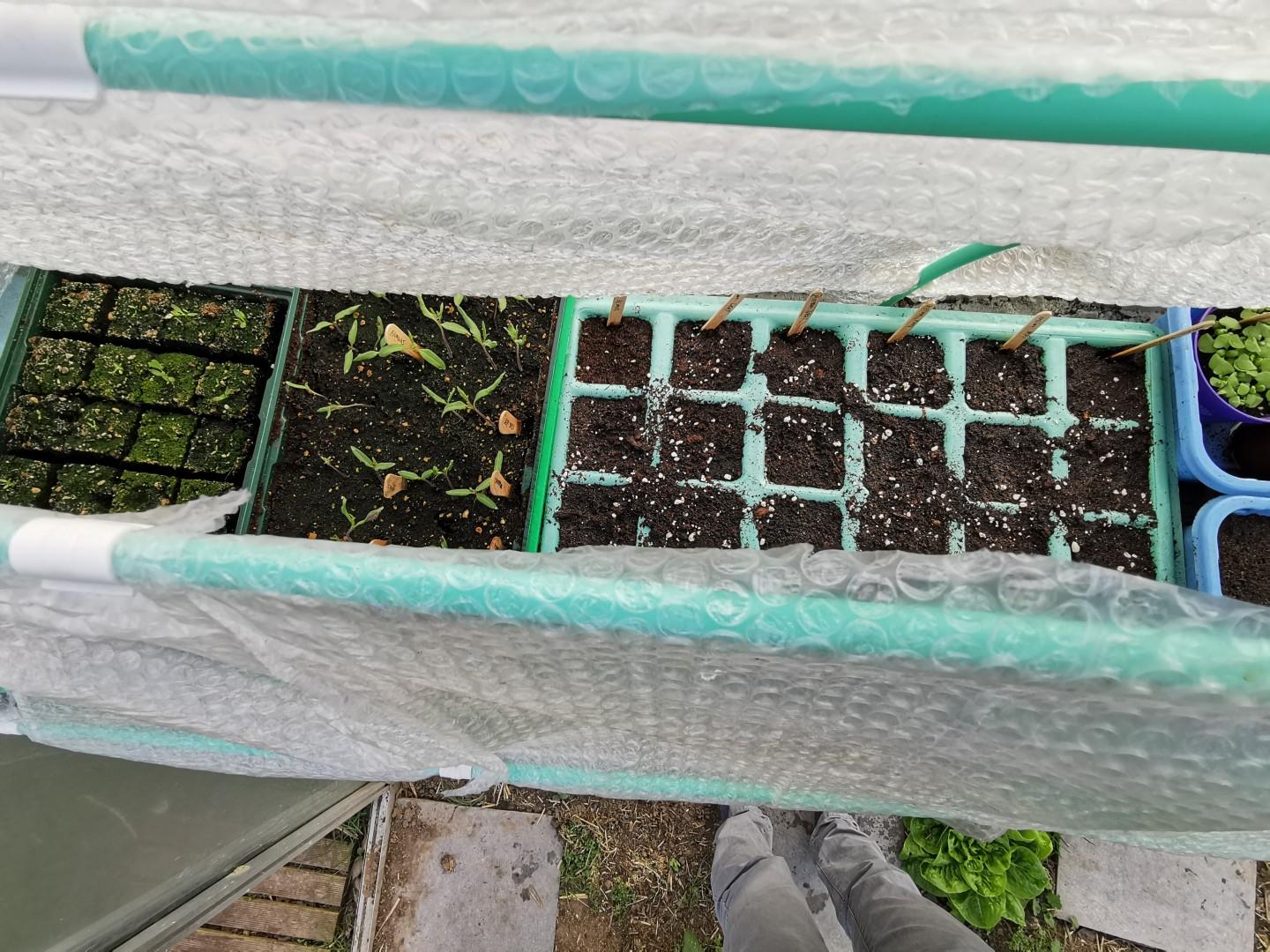
- A temperature probe with sensor placed in the sand turns on the heating cable when the temperature drops below a certain only; for my part, 6°. With the bubble-paper protection, it generally activates when the outside temperature is around 0°, so only a few nights a month.

- For the record, I've also placed a connected thermometer to get the temperature in real time on my phone and set up alerts on it in case the temperature gets too high.
Seedlings that stay indoors
Warning, this is not to say that I no longer store any seedlings inside the house but there are at most three or four trays and only at the start of the season (much to my wife🤣 s delight).
- The aubergine, chilli and pepper seedlings I'm starting at the beginning of February are coming up on a shelf behind a south-facing window in the house. A small 15W heating mat provides them with a temperature of 25°. I remove the mat when the seedlings have sprouted and move the trays to my "warm seedling greenhouse in the cold greenhouse" from mid-March onwards.

- The tomato seedlings I'll be growing in the greenhouse are also coming up in the house as I sow them at the beginning of March. Once they have emerged, I place them in my cold greenhouse protected from frost thanks to the installation I showed you, alongside the aubergine and pepper seedlings.

This method has only one small drawback: as temperatures sometimes drop to around 6° at night, seedlings take a little longer to grow than if you left them in the house at a constant temperature of 19/20°. On the other hand, there's no risk of them withering away, and if you start at the times I've indicated in this article, your seedlings will be perfectly well developed for transplanting outdoors or in the greenhouse around May.
