

Celery
How to sow celery successfully under cover?
To grow celery under cover, we recommend starting seedlings in March. Choose a deep container and fill it with good quality potting soil. Make sure the substrate is well drained to prevent root rot.
Sow the seeds on the surface of the compost, spacing them about 1 cm apart. Then cover them with a thin layer of potting soil and tamp lightly. Water gently without flooding the substrate.
Then place the container under cover, at a temperature of around 18-20°C. Be sure to keep the potting soil moist by watering regularly, but not excessively. Once the plants have reached a few centimetres in height, transplant them into individual pots to encourage their development.
Monitor your celery plants regularly to remove weeds and check for disease. Once they have reached a sufficient size, you can transplant them into the ground. By following these tips, you'll be able to harvest tasty, healthy celery from your garden.
How do I sow celery outdoors?
To sow celery outdoors, it's important to choose a sunny spot that's protected from the wind. It's best to sow in April, when there's no risk of frost. Prepare the soil by decompacting it and amending it with well-decomposed compost. Sow the seeds to a depth of 0.5 cm and space the rows of seeds about 30 cm apart. Keep the soil fresh by watering regularly, but without soaking it. It's important to keep an eye out for diseases such as grey mould and act quickly if necessary. When the plants have a few leaves, thin them out, keeping only the most vigorous plants and leaving a space of 15 cm between each plant. When the plants are about ten centimetres tall, you can transplant them into your vegetable garden, observing the recommended planting distances. By following these simple tips, you'll be able to harvest beautiful celery for your soups and salads.
How do I plant celery?
To grow celery, we recommend planting the seeds directly in the ground in spring, once all risk of frost has passed. Celery likes soil that is rich in organic matter, well-drained and slightly acidic. Before sowing, it's best to work the soil deeply, adding compost if necessary.
Sow the seeds about 1 cm deep and 20-30 cm apart. Keep the soil constantly moist but not soggy, watering regularly. When the plants reach a few centimetres in height, thin them out, keeping only the most vigorous.
If you opt to transplant celery plants, do so around 6 to 8 weeks after sowing, when the plants have 4 to 6 leaves. Dig holes about 20-30 cm apart and plant the plants, taking care not to bury the crown.
By following these growing tips, you should get beautiful, healthy and tasty celery, perfect for adding to your dishes and salads all season long.
How to harvest celery
Celeriac is a delicate vegetable that can be harvested in late summer and early autumn. To tell if it's ready to harvest, simply check whether the stalks are thick and firm enough. To harvest celery, we recommend cutting the stalks flush with the ground with a sharp knife.
After harvesting, we recommend storing the celery in a cool, damp place. It can be stored for up to several weeks by placing it in a perforated plastic bag in the vegetable drawer of the fridge. It's important not to wash the celery before storing, as moisture can speed up its deterioration.
Finally, to encourage good celery growth, it is advisable to plant it in fertile, well-drained soil, and to water it regularly. It is also advisable to mulch around the plants to keep the soil moist. By following these growing tips, you'll be able to enjoy a tasty crop of celery in your garden.
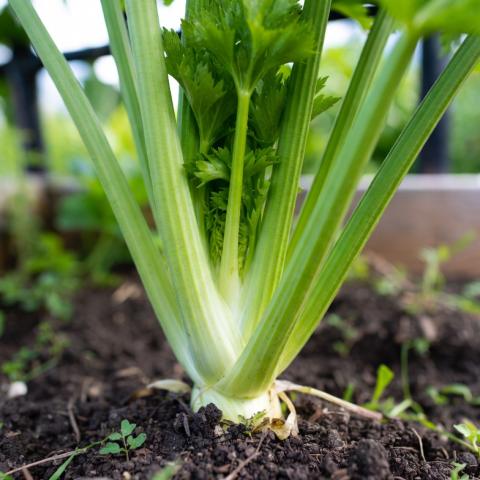
Celery
- Type : Vegetables
- Subtype : Leafy vegetables
- Botanical Family : Apiaceae (umbelliferae)
Characteristics
- Lifecycle : Annual
- Exposure : Full Sun
- Frost Hardiness : Slightly Frost Sensitive
- Cultivation Difficulty : Medium
- Mature height : 50 cm
Sowing & Planting
- Greenhouse Growing : Not Required
- Sowing Depth : 0.5 cm
- Plant Spacing : 25 cm
- Row Spacing : 30 cm
Maintenance
- Maintenance : Moderate
- Water Requirements : Moderate
Other characteristics
- Soil Type : Humus-rich
- Soil pH Preference : Neutral
- Pest Sensitivity : Moderate
- Disease Sensitivity : Moderate
- Weed Sensitivity : Moderate
- Pollination : Insect-pollinated
- Propagation : Sowing