


Planning your garden: turning your ideas into a practical vegetable patch
Planning your garden starts with making choices: what you want to grow, how much time you can devote to the vegetable patch, and the constraints you wish to work within. Before sketching out all your crops, draw up a plan that fits in with your daily life. This approach prevents every whim from turning into a purchase, and every purchase from becoming a burden.
Set a main goal for the season
Choose a priority: discovering a few crops, regularly harvesting your favourite vegetables, or improving an existing system. Having one main objective helps you decide what to cut out when you’re short on space or time. If everything is a priority, you risk piling up projects without knowing which ones to simplify.
Write this objective down in a single sentence that can be measured through your own observations. For example: ‘I want to see a few crops through to harvest and keep a record of the actual dates.’ This will allow you to assess your growing season in a way other than by comparing your garden to a larger or more established vegetable patch.
Estimate the time actually available
Take a look at your usual routine: how often you visit, the length of each session and periods when you’re away. Separate the major preparatory work from the follow-up tasks. You might have a weekend to organise the plots without being able to keep an eye on a large number of young plants every day.
Make a note of the busy periods in your diary before allocating the crops. If you’re expecting help, specify which tasks will be covered. Simply saying ‘someone will pop round’ isn’t enough to organise watering or harvesting; a short, clear list makes it easier to hand over.
Prioritise constraints before making purchases
- Land area: which areas will actually be cultivated?
- Access: how will you get round with your tools and crops?
- Water: Which water source will be used, and who has access to it?
- Equipment: what do you already have, and what else do you actually need?
- Follow-up: which crops require a level of attention that fits in with your schedule?
A constraint is not necessarily an obstacle to be removed. It can steer the project towards growing fewer crops, a more compact layout, or trials spread over several seasons. Adapting one’s ambitions to the available garden space is a design decision.
Turning a wish list into a selection of crops
For each vegetable, assign a priority, a possible location and an estimated quantity. Start with the ones you like and want to keep track of. Keep trial plants on a separate list. They can be added to the plan when space and time to monitor them become available.
Let’s take a project with four priority vegetables and six trials. Rather than growing ten varieties straight away, set aside the first plots for the priorities and then choose one or two trials. This approach does not close the garden off to new discoveries; it simply makes it easier to observe the results.
Draw up a shopping list for the project
Every purchase should be for a specific purpose. For seeds, check the variety and the packets available. For containers, work out how many sets you’ll need. For supports and protective coverings, identify the specific crop or plot in question. This will help you avoid buying equipment simply because it seems useful in a garden in general.
Allow a small margin for replacements without building up a disproportionate reserve. If a trial is postponed, postpone the associated purchases as well. The budget thus becomes a consequence of the programme, rather than being spent before the locations have been decided.
Carry out an initial consistency check
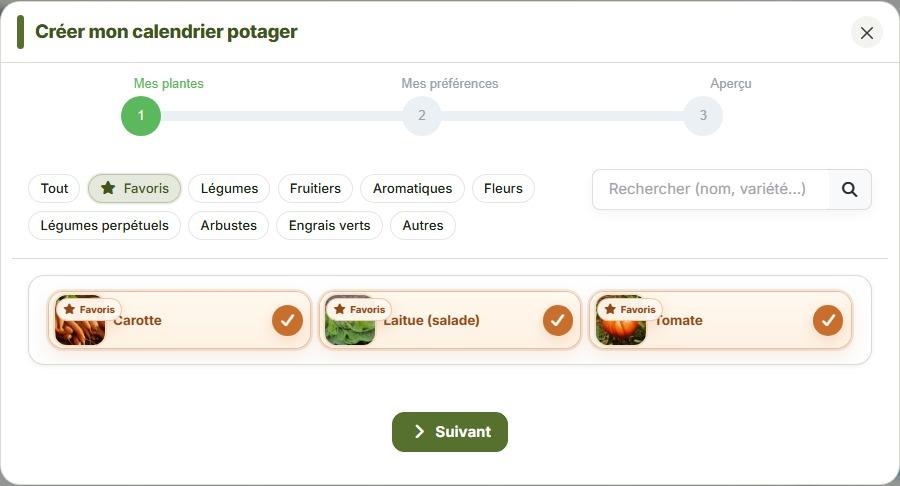
Open the vegetable garden plan to mark out the selected areas. Use the crop calendar to identify the main timeframes. Check that the venues and your schedule allow for this programme to go ahead. At this stage, the detailed dimensions and exact sequences may still be subject to change.
Finish with three lists: what has been decided, what still needs checking, and what has been postponed. This distinction prevents you from treating an idea as an obligation. Throughout the season, keep the main objective in mind: if the project requires too much monitoring, start by simplifying the trials and quantities, then keep a record of these choices to prepare for the next stage.
The steps involved in making Permapots
Further guides
